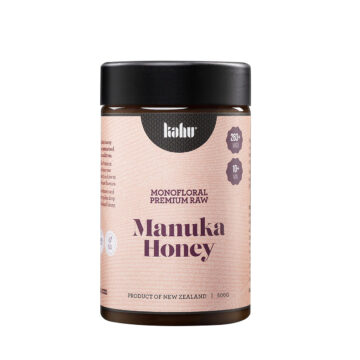
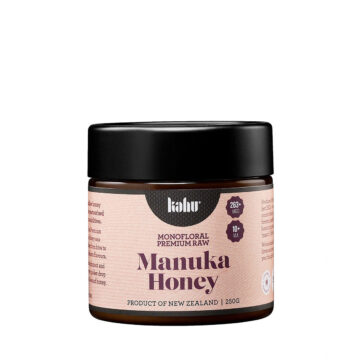
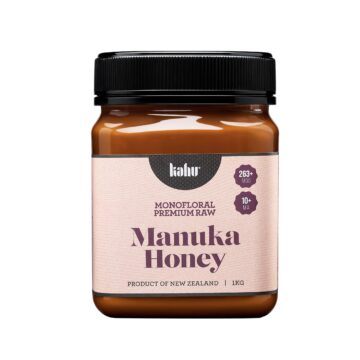
This honey is taken direct from honey frame to jar and has been coarsely filtered. As a result, some jars of this year’s Bush Honey may have a layer of foam on top, or small natural particles attached to the underside of the lid. If you notice this, please don’t worry.
The is actually a result of our commitment to keeping our honey as close to its natural state as possible.
Most commercial honeys are filtered very finely to create a perfectly clear appearance. While this produces a cleaner-looking honey, it also removes more of the natural pollen, propolis particles, and characteristics that make each honey unique.
We have deliberately used a coarse filtration process to retain as much of the honey’s natural character as possible. As a result, tiny natural particles such as pollen and beeswax can sometimes gather within the foam layer. This season, we have noticed that more of this foam has collected at the top of some jars and occasionally on the underside of the lid.
Although it may look a little unusual, it is completely safe and natural.
The foam that forms in the extraction process is normally removed after settling in tanks. We have taken the honey straight from the frame to the jar which has left some foam on the top of the honey. It is a sign of minimal processing and can be eaten as is.
Or if you prefer, you can simply:
- Remove the foam before eating or
- Stir it back into the honey
No two seasons are ever exactly the same, and neither is truly natural honey. After all, this isn’t a product made by a factory. It’s a food made by bees and nature.
Thank you for supporting our commitment to producing honey as naturally as possible.